
Connecting Veterans in the Top End
For eight weeks, each Saturday morning at the RSPCA NT Darwin Shelter, a small group of veterans and Defence personnel set out to brighten the days of dogs waiting for a home and left a lasting pawprint on their own journeys along the way.
Happy Paws Happy Hearts (HPHH) was proud to facilitate another round of our Intensive Train program, designed for Veterans and first responders, fully funded by the Northern Territory Government’s Veteran Community Health and Wellbeing Grant.
Stepping away from service and into civilian life can bring a wave of new decisions, many of which veterans may never have had to make while serving. It can also bring a loss of identity, purpose and belonging. Finding somewhere accessible, doing something they'd actually enjoy, is challenging enough on its own. Then come the questions of whether funding is available, whether it's the right kind of funding, and how to use the support they already have.
That's why having this program available at no cost was so valuable, taking many of those decisions off the table. All participants needed to bring was their courageous hearts. Walking into a room of strangers to try something new is another challenge altogether, and one that takes more courage than it looks.
Feeling connected to others plays an important part in helping veterans find their footing again, and that connection is at the heart of how the Intensive Train program is designed. Each session brings veterans together with each other and with rescue dogs, learning side-by-side, with a shared purpose of helping dogs at their best chance of adoption and finding a new home.
Most participants arrived knowing little about animal training.
Week 1 started with the basics: how to read a dog's body language, how to tell a relaxed dog from a stressed one, and how to move safely around animals who might be anxious or unsure of people. As one participant, Linda, put it early on, “different dogs need different approaches”.
That lesson reached past the shelter straight away. After her first session, one of the participants, Kyeleisha, went home and saw the same stress signals in her own dog. Things she hadn't noticed before now made sense, and she was equip with the tools to make a positive change.
Early in the program, the group met Dave, Veteran and past Intensive Train participant. He spoke openly about that challenge of walking into a new room full of people and how on his first session, he turned around home, too nervous to join. He also shared how grateful he was that he decided to return the week following and everything he has achieved since including being a HPHH ambassador and volunteer, RSPCA NT valued volunteer and 2026 Volunteer of the Year Nominee, and student in Vet Nursing. While the group was initially reserved that day, several said how much it meant to hear from someone who had been in their shoes. For Linda, it "filled in the gaps."
Over the following weeks the group moved from observing animal skills from HPHH Program Trainer, Margaret, to hands-on training themselves. They learnt mark-and-reward and lure-and-reward techniques, how to build positive associations, and how to solve problems on the spot with dogs who each had their own history, coping behaviours in shelter and needs. By Week five, participant Linda, spent a full 30-minute at-wire and in-pen session with Koba, a 2-year-old Shar Pei, working on basic commands such as sit, heel, touch, chin rest, come when called and station/wait. All mark-and-reward skills she had built in just five sessions.
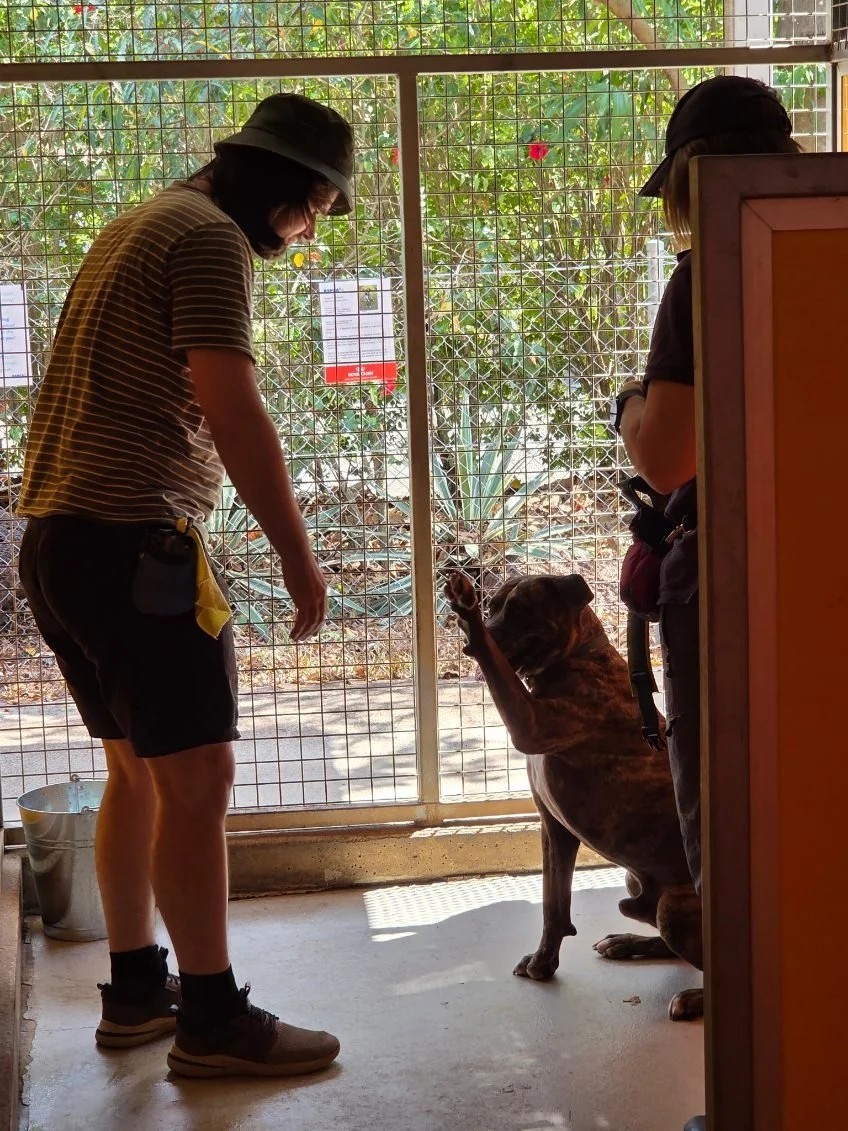
At-wire work is a practical exercise woven into sessions across many HPHH programs. It gives people and animals the chance to connect safely and positively through the wire of a dog's kennel, marking moments of positive behaviour with a cue and a treat. Once that trust is in place, participants can take the next step and move into the pen itself. Working side-by-side with the dog, they can practise training in a closer, more hands-on way and build on their bond together.
For the participants, they are learning patience and how to give shelter animals the time and space to build trust. In return, even 10 minutes can create a remarkable shift—from a shy or nervous animal to one that is beginning to engage, connect and show confidence, all which positively impacts their adoptability.
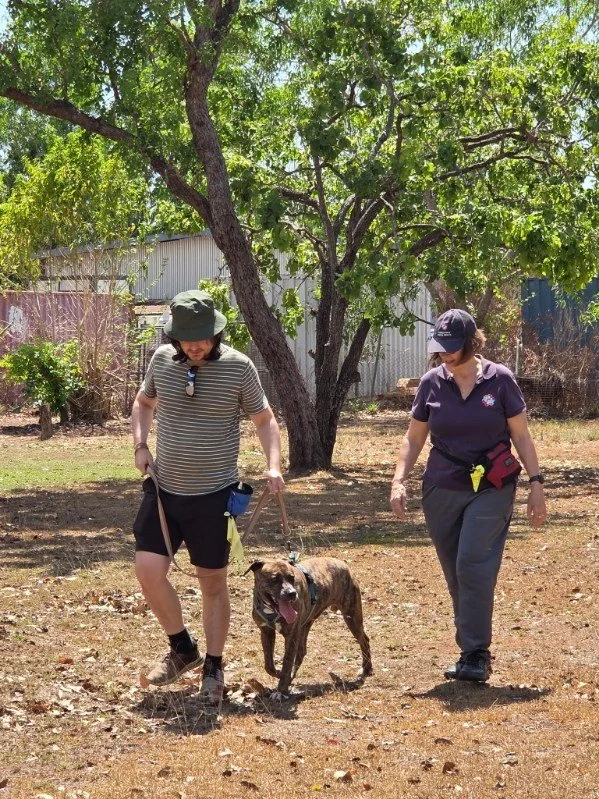
Zuke, a 7-year-old Belgian Shepherd - Malinois / Rhodesian Ridgeback had been showing signs of stress and caution in kennel, taking his time to warm up to new people when the group first met him. This is a common way for dogs to cope with shelter life, and it can make it harder for them to show potential adopters who they really are. Regular, positive time with people is one of the most valuable things a dog like Zuke can have, and similarly one of the most valuable contributions our participant groups can bring a shelter and its animals.
Participants arrive in twos and threes, and sometimes five or six at once, and they come from different ages and stages of life. Each session gave Zuke (and the other dogs in shelter) a wider range of people to meet, all of them calm, patient and working at his pace. That variety helps a dogs’ comfort grow beyond one familiar face, which gives them a much better chance of connecting with potential adopters.
After a few sessions, the change was clear. The dog who had been wary of everyone began to relax, greet people with more trust and wiggle some energetic tail wags with their returning visits. When Zuke was moved to a kennel without an outside view the group discussed how losing much of the sights and sounds that kept him engaged could impact his progress. They kept up his mark-and-reward training and positive socialisation so his days stayed positive, and he wouldn't slip back into a timid, stressed state following the change.
Zuke has since been adopted and found his new people!
For the participants, watching Zuke’s (and the other dogs they worked with) behaviour shift positively week-by-week was one of the most meaningful parts of the program. The shy and guarded dog they met, transformed into a social, confident one, and participants left knowing their patience and training had helped make it happen. That brought a real sense of purpose that went home with them at the end of each session.
Linda summed up why she came back each week: she was there "for the dogs and the people in the group."