

Helping Bandit Put His Best Paw Forward
Some dogs are fortunate to find their forever homes quickly, while others spend a little longer waiting to find their new home.
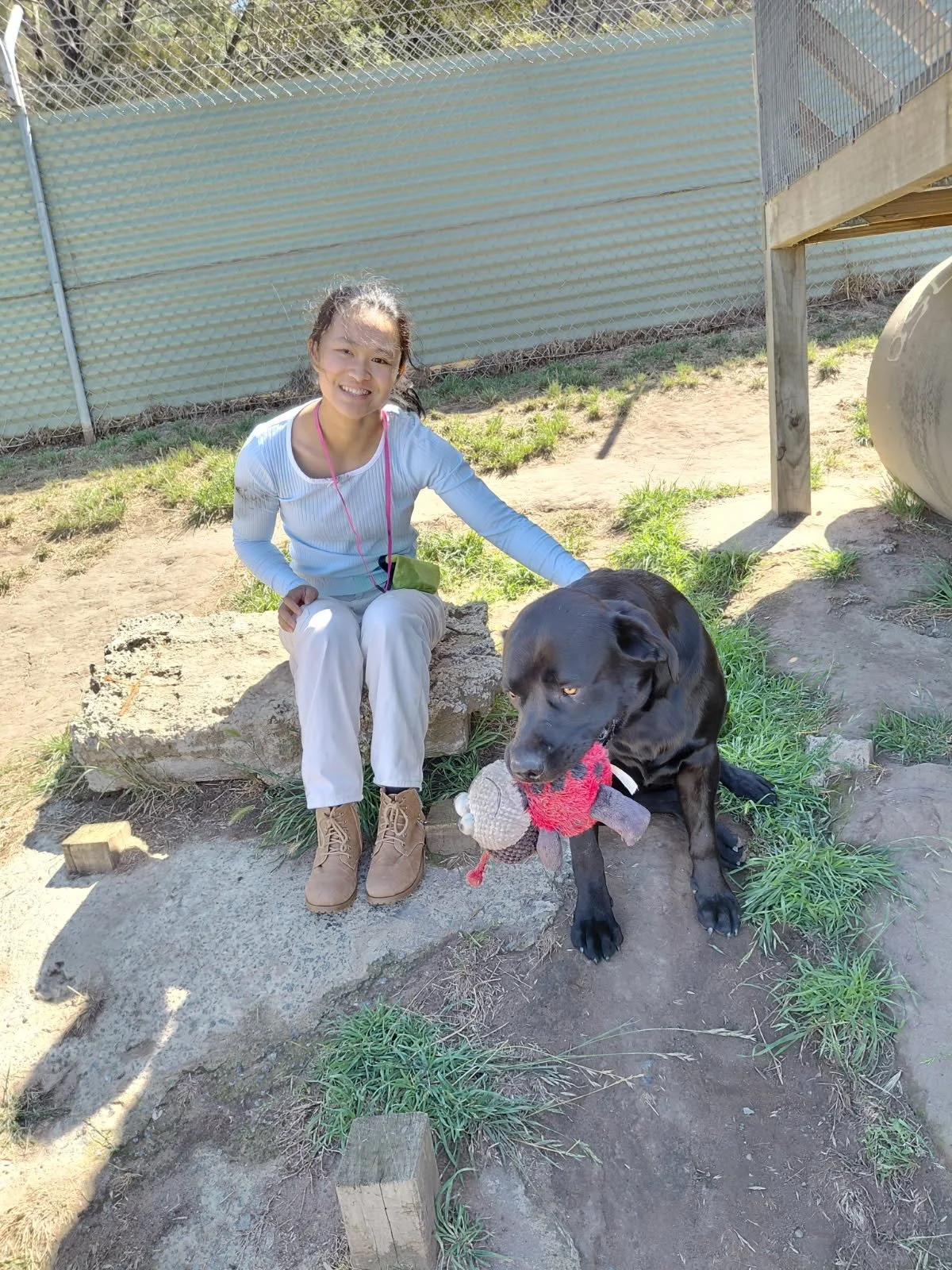
HPHH participant, Alice and Bandit
While every adoption is celebrated, the longer-stay dogs often become especially familiar faces to our participants, who relish the opportunity to continue building relationships with them week after week.
For these dogs, their time in care is filled with more than food, shelter and daily husbandry. Through regular interactions with HPHH participants, they receive ongoing socialisation, enrichment, training and, perhaps most importantly, genuine connection and affection. For our participants, there is truly something special about walking into a session and discovering they can spend time again with a dog they have come to know and care about.
Bandit, a goofy 1.5-year-old Labrador, was one of those dogs.
Described by participants as a lover of people, toys and food, Bandit quickly became a favourite. While his enthusiasm for life was part of his charm, it also presented an opportunity for learning.
Like many young, social dogs, Bandit's excitement sometimes showed up as jumping on people or bouncing up against fences in an effort to seek attention and connection.
Through regular interactions with participants, Bandit was given the opportunity to practise more adoptable behaviours in a positive way. Participants spent time with Bandit both at-wire (engaging with Bandit from outside of his pen) and more freely in the yard, consistently reinforcing calm greetings and rewarding him when all four paws were on the floor.
If Bandit became a little too enthusiastic, participants calmly turned away and waited for calm behaviour before marking and rewarding it. Group members worked together, supporting one another by redirecting Bandit's attention with food or toys when needed and celebrating his successes as a group.
One of Bandit's favourite places was the open-sided shelter affectionately known by participants as the "cubby house." Here, Bandit would often settle down beside participants, happily resting his head in a willing lap and enjoying quiet moments of affection. These experiences provided valuable opportunities for him to practise calm interactions with people with opportunities to regulate, while building positive associations with human company.
Throughout Bandit’s time in shelter (a few months), participants began noticing a change. Bandit was jumping up less frequently, both on fences and on people, and showing more of the calm behaviours that can help dogs make positive impressions on potential adopters.
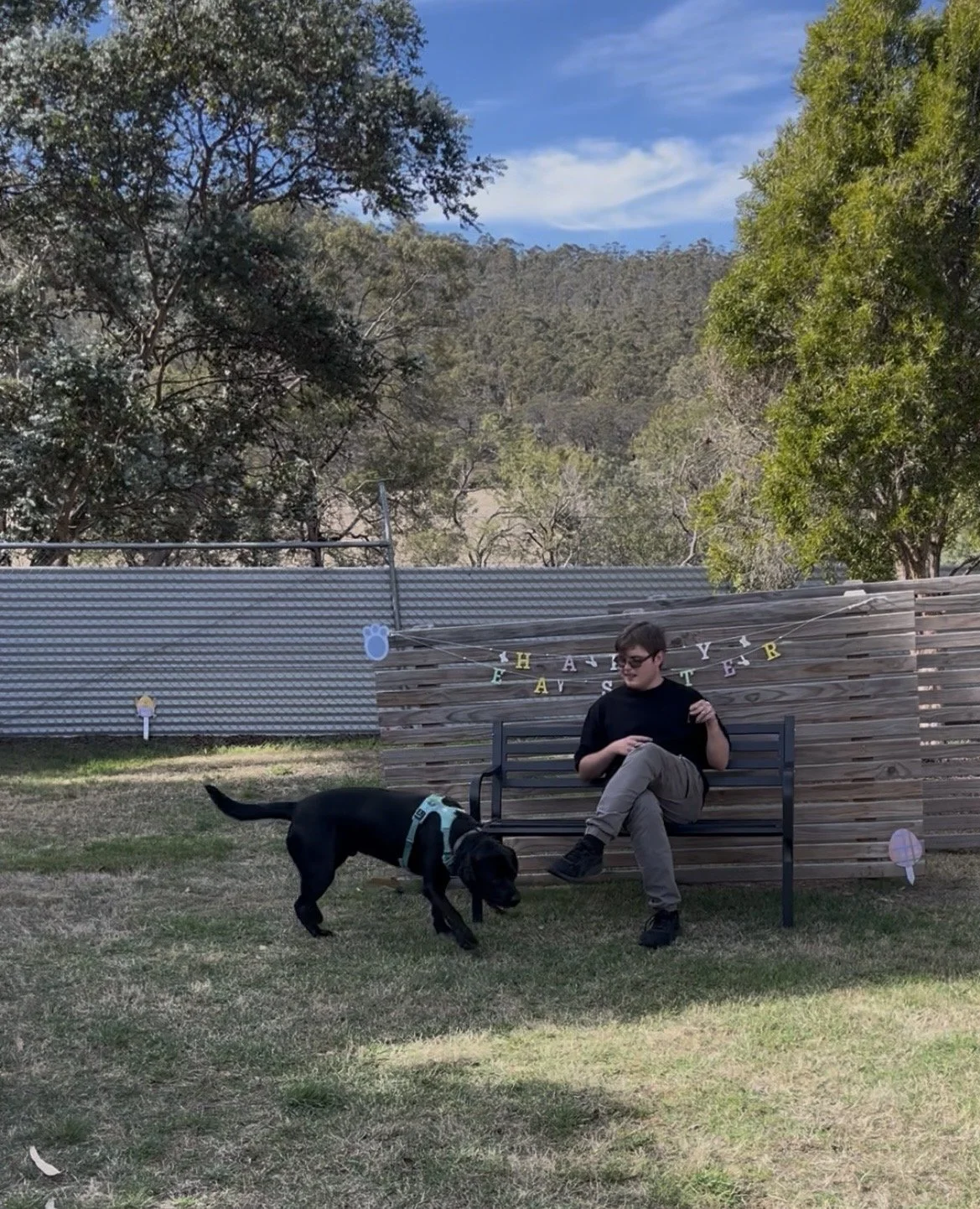
Bandit with HPHH participant, Zac
The participants also found creative ways to build on their skills in animal care and enrich Bandit's time in shelter. Groups made special dog-friendly treats, created busy boxes and designed a scent trail throughout the yard, encouraging him to use his nose and engage in natural foraging behaviours. Activities like these provide important mental stimulation for dogs in shelter and help make their days more positive and engaging.
While Bandit was learning, participants were too. Working with a large, energetic dog helped build their confidence in reading behaviour, applying training techniques and working as a team to support positive outcomes.
Bandit's story is a wonderful example of the power of consistent socialisation, enrichment and positive reinforcement. For dogs experiencing longer stays in care, these interactions can help build the skills and behaviours that support their adoption journey—one calm greeting and one head-in-a-lap cuddle at a time.