
Constructive destruction: busy boxes for Ragnar
At Dogs' Homes of Tasmania in Hobart, there's a dog who made cardboard destruction his full-time job.
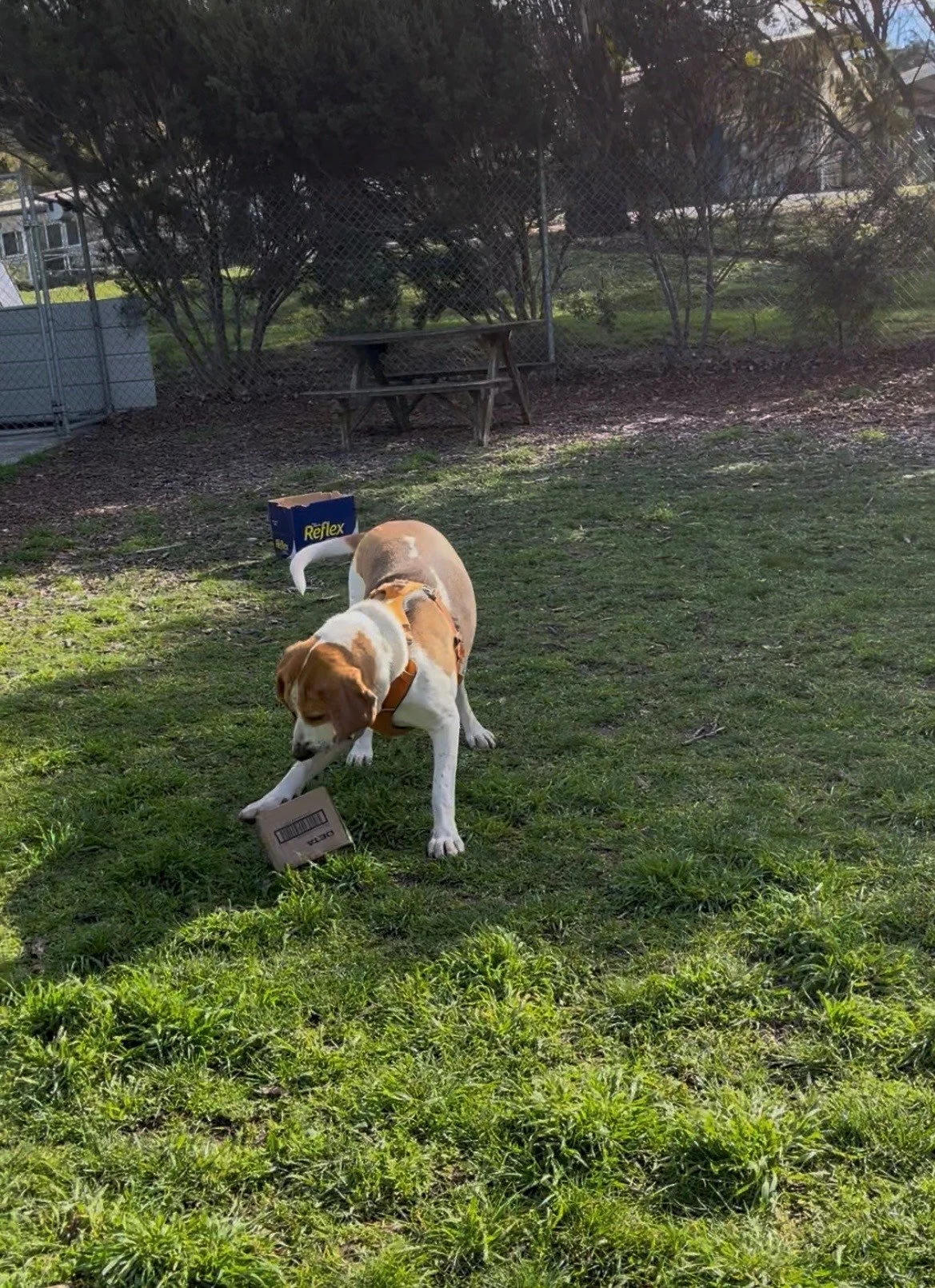
Ragnar with his busy box!
Ragnar is a clever hound, who had been waiting a while for his forever home, having transferred down from one of Dogs’ Homes northern sites (spoiler alert - he’s now found his new family)!
Long stays in care are hard on any dog, and Ragnar was one of several dogs at the centre who needed extra enrichment to help them cope in positive ways. Enter: Happy Paws Happy Hearts participants (HPHH)!
Enrichment underpins almost every session across our nine locations. It is one of the most direct ways participants can improve an animal's time in care and make the wait for a home a more positive one. Good enrichment gives an animal physical, emotional and social stimulation, and helps it cope well with shelter life. That coping matters beyond the kennel: an animal that is coping well usually has better wellbeing, and wellbeing shapes how it behaves when potential adopters come to meet it. Put simply, enrichment helps an animal stay healthy and happy to put its best paw forward for adoption.
Recently, several of our HPHH groups have been helping the animals by making busy boxes in what we have affectionally described as a constructive destruction enrichment activity!
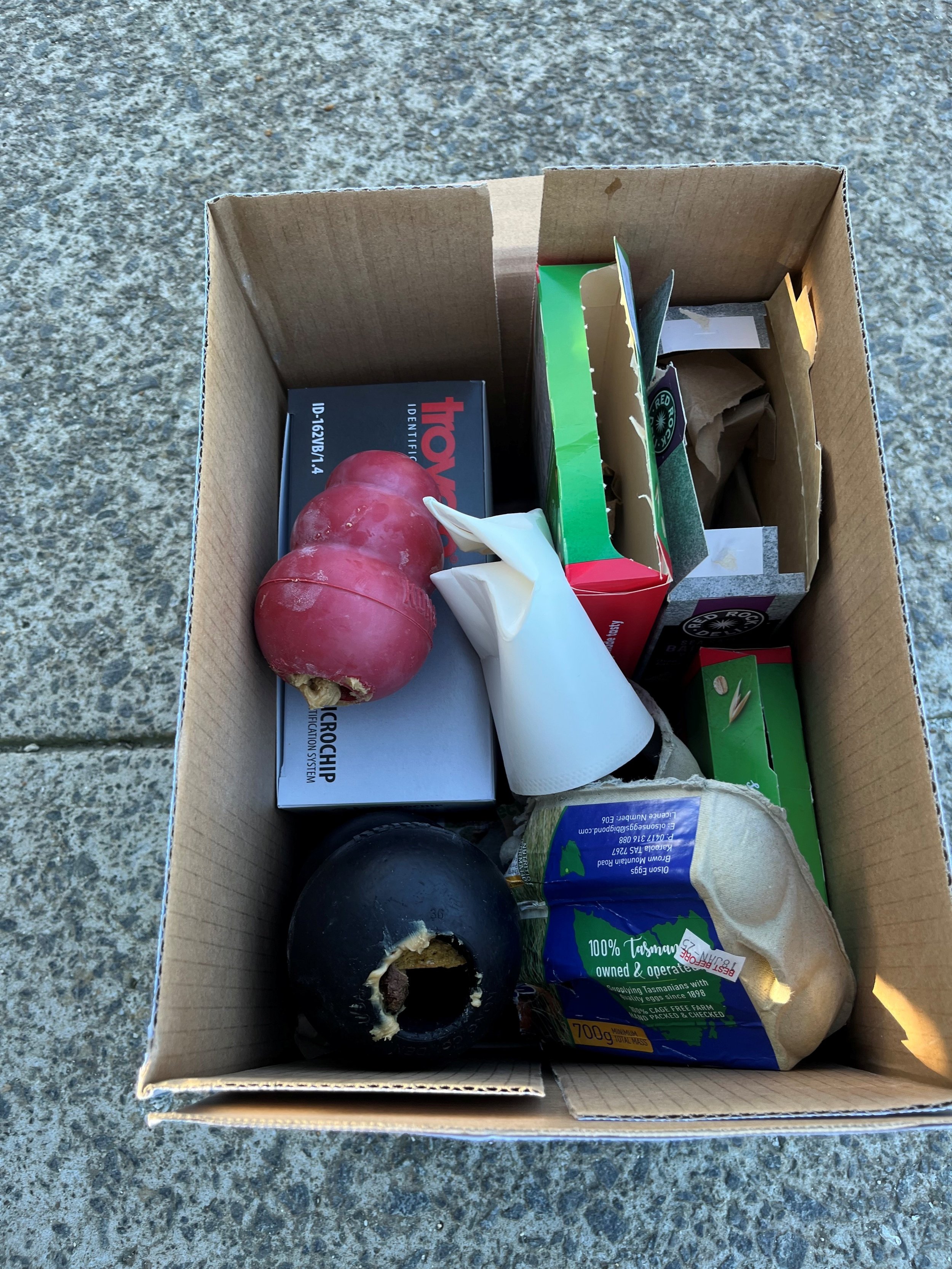
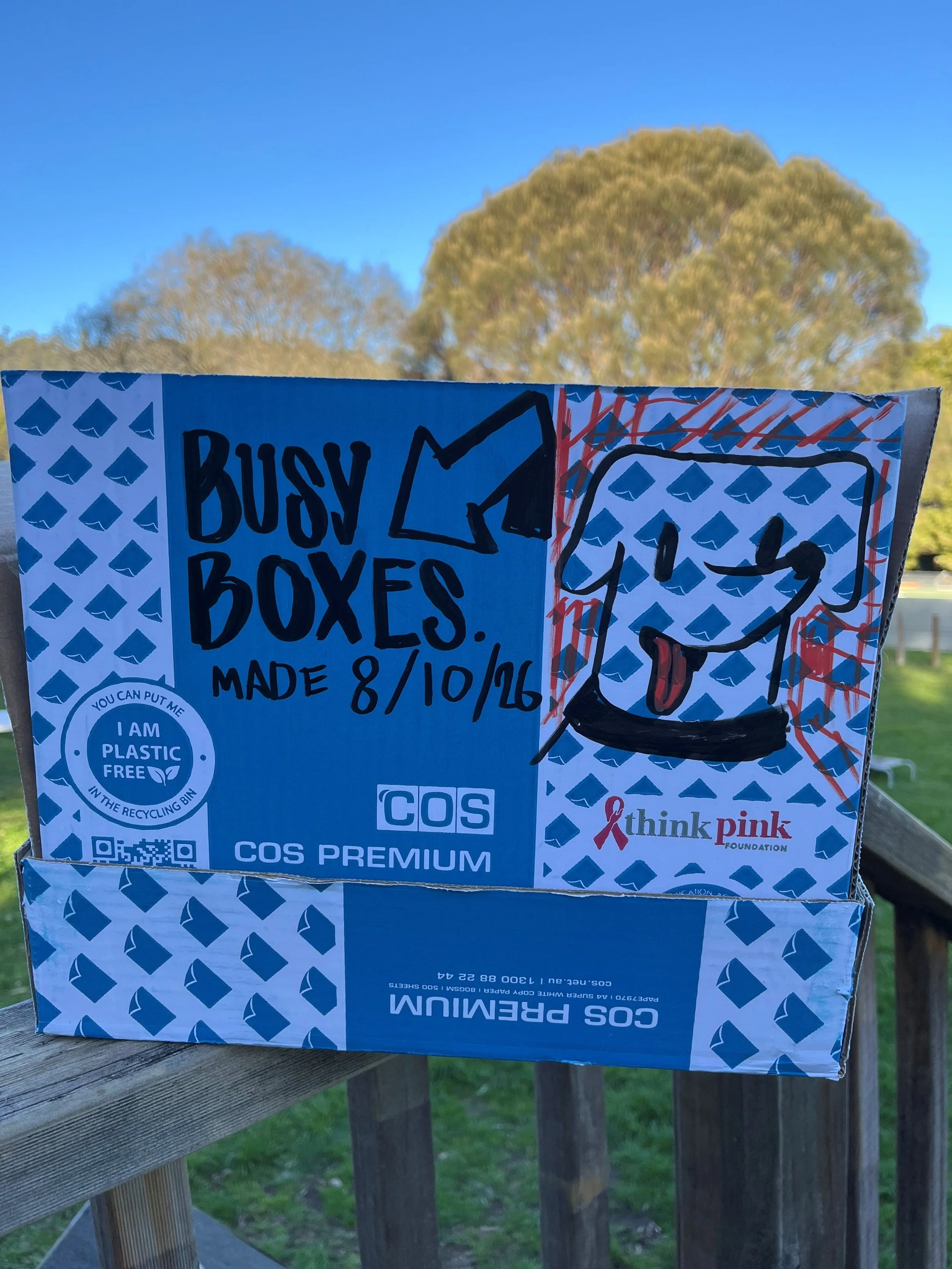
A busy box is exactly what it sounds like: a box packed with smaller cardboard boxes, rolls, cups and cartons, each hiding treats for a dog to sniff out, unwrap and tear into.
When our Train group were asked why busy boxes matter, the answers came quickly. They said a busy box is a form of enrichment and a rewarding experience which gives a dog's brain as much of a workout as its body. The group's favourite description was of course, "constructive destruction". Mental stimulation is vital for dogs in care, and a good busy box can leave a dog calm and pleasantly tired, which is why many of the boxes are made to hand out at bedtime.
The participants have also learnt that no two dogs need the same box. Some dogs aren't food motivated or are unsure around boxes. For them, participants have to find creative ways to spark the dog's curiosity, which makes every build a problem-solving exercise. Others may have had teeth removed and need a box that doesn't rely on ripping. Working breeds often love to earn their reward and need a bigger challenge. Designing each box around the dog who will receive it has become second nature to the group.
True to a hound’s nature, Ragnar and his strong nose sat firmly at the challenging end: the harder the box, the better he liked it. The group made it their mission to keep up with his clever brain, creating large boxes packed with layers.
Some of their creations included:
egg cartons with a treat wrapped in paper or toilet roll in each space
tea bag and cereal boxes and saved parcel boxes
toilet rolls and paper cups folded shut at the ends, with treat-sized holes cut into them.
Once Ragnar worked through the contents with plenty of treats for his hound nose to scent out, he took the outer box and pulled that apart too, leaving no shred standing!
Now, you may be asking: how can destruction of any kind be constructive, even when it's enrichment? It comes down to what gets destroyed, and why. Ragnar is a notorious blanket ripper, so the team keep fabric well away from his boxes to not condone or reward the behaviour. When a dog shreds whatever is lying around its kennel, it's usually a sign of boredom, or simply doing their best to cope. A busy box takes that same urge to rip and tear and gives it a purpose. The box is made to be pulled apart, and every tear brings a dog closer to a treat and another puzzle solved. Ragnar still gets to destroy something, but now it's the right thing, and he learns that this kind of destruction is okay.
To make the busy box even more customised and special, some of the treats mixed inside were homemade creations from our Care group who mixed a batch of dog biscuits in one of their recent sessions.
The boxes are doing good work for the people making them too. Layla and Jason from the Train group love sitting down together to build them, chatting as they fold, cut and stuff. It has become an easy, low-pressure way to connect, and it happens almost without them noticing.