

Building Opal’s adoption profile
Unsurprisingly, an animal’s true nature can be hard to see from outside of a shelter kennel, particularly for dogs. With rows of dogs feeding off each other's energy every time someone walks past - barking, excitement, noise - even a calm, gentle dog can be misrepresented to a passerby.
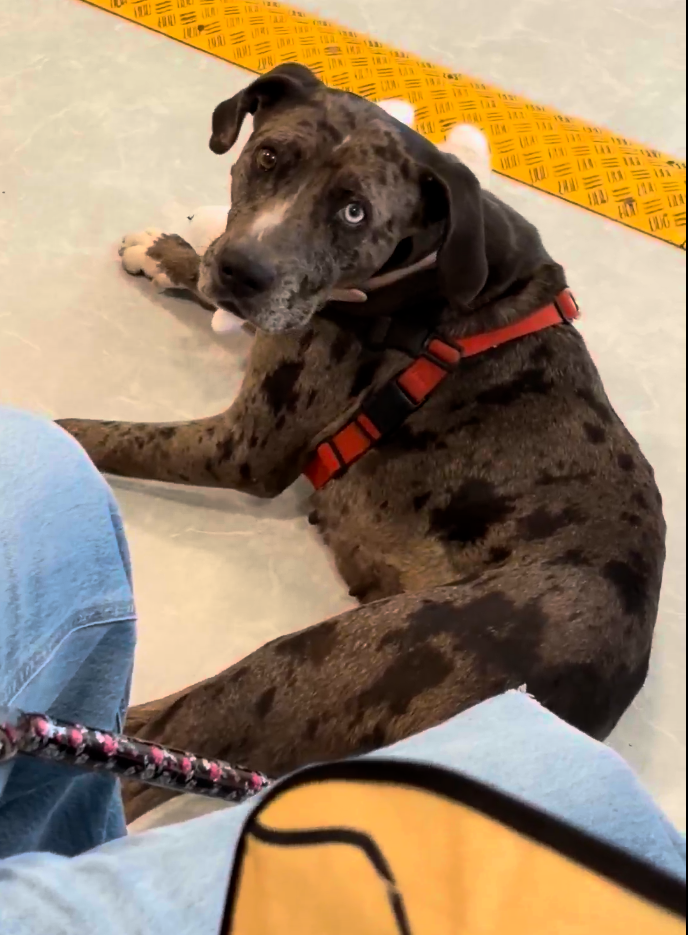
This is one way our Happy Paws Happy Hearts (HPHH) groups support animals in shelter. Our participants engage in positive training that builds genuinely adoptable behaviours - staying calm and quiet when someone walks past, settling on the lead, and even learning a "sit pretty" to really show off their skills- and they help build adoption profiles for the dogs in care.
With animal care staff caring for so many animals, HPHH sessions offer valuable extra time to sit and observe a dog in a room full of people and stimuli. Our sessions give a dog the chance to meet different people, move through different noise levels and different kinds of stimulation, while our participants watch closely for their behaviour, comfort, personality, and the strengths that might shine through for a potential adopter.
A recent session at RSPCA Dakabin put all of this into practice with Opal, a sweet, gentle and affectionate 7-year-old Louisiana Catahoula Leopard Dog.
Opal entered the HPHH session room curious and sociable, making her way around the group to greet everyone, instantly capturing hearts.
The group's task for this session was to help build Opal's adoption profile: a simple checklist that would go up on her pen for potential adopters and shelter staff to see.
Working through the checklist, the group had plenty to tick with confidence. With up to fifteen people in the room at once (participants, their supports, and our HPHH Program Trainer and volunteers), Opal stayed calm and comfortable, keeping her excitement and energy in check as the room buzzed around her: a strong sign for how she'd handle a busy new environment.
While the senior sweetheart charmed the group, her basic command skills weren’t quite ready for the spotlight. The group quickly noticed Opal was more interested in the room and the people in it than she was in food, or in earning her commands. When each participant asked her to sit, she chose to keep wandering curiously, or simply stand close for pats.
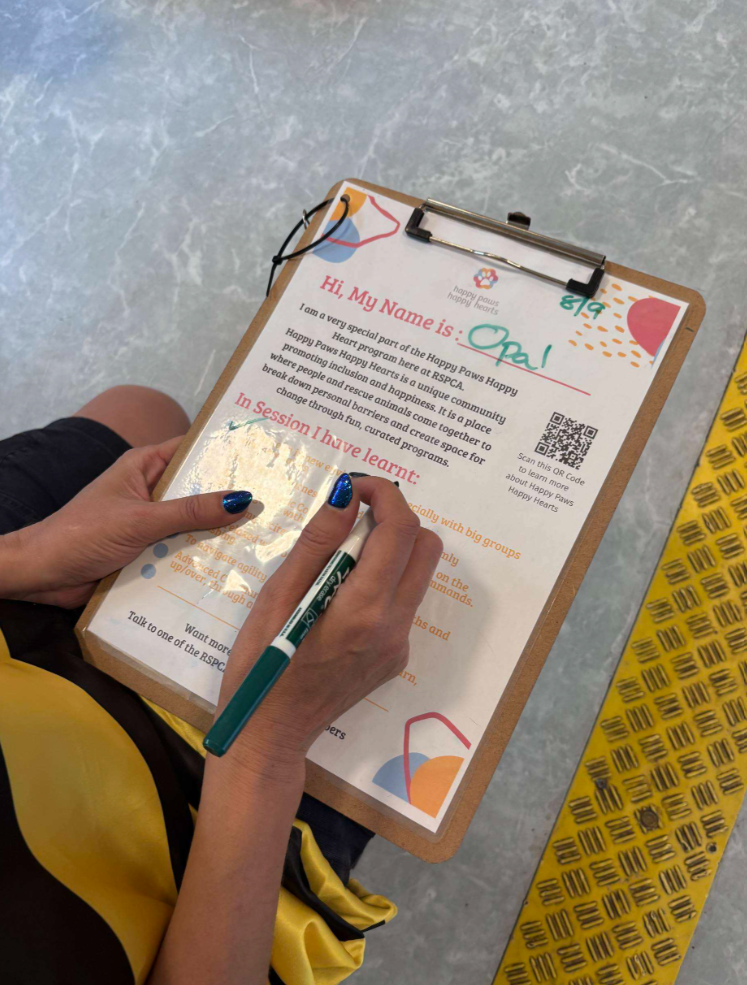
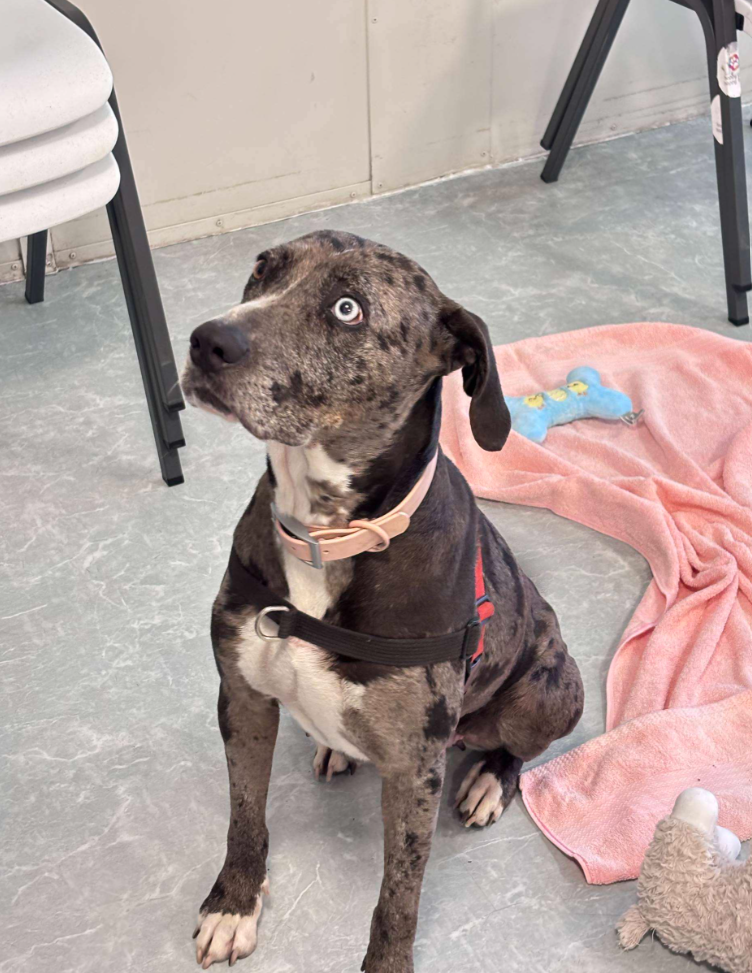
Rather than push for it, the group changed tactics. Always prioritising an animal's freedom of choice, they let Opal wander the room freely, and the moment she chose to sit on her own, the group was quick to capture the behaviour, mark it, and reward her.
Each sit became its own small, joyous moment, the whole room quietly celebrating together, every person invested in Opal's progress. While Opal was learning, so were the participants. This was their first taste of ‘capturing’—a more reactive style of training.
Rather than their usual approach of asking for a behaviour, marking it with a cue, and rewarding it, participants practiced rewarding a behaviour the moment Opal chose to offer it herself. It took real teamwork and sharp, fast observation: every participant watching, ready to celebrate together the second it happened.
For Opal, this session was a small step toward the confidence and consistency that will help her put her best paw forward for a new home. For our participants, it was something just as valuable: a new technique learned, patience practiced, and another reminder of what a room full of people, working as one, can achieve together.