
Building connection with every handler: Ripley's Command Bingo challenge
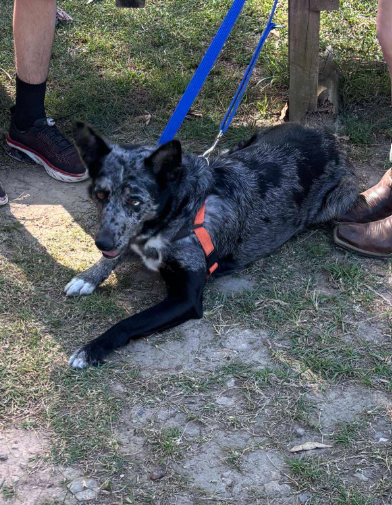
Ripley is a five-year-old Australian Koolie; a working dog through and through, currently at RSPCA Dakabin.
Like a lot of working breeds in shelter, Ripley’s intelligence is a gift and a challenge in equal measure: give Ripley a job and he'll receive an A+; leave him without one or one with unclear/mixed commands, and that same busy brain can easily fixate on something else. That's exactly the challenge our participants took on in a recent session.
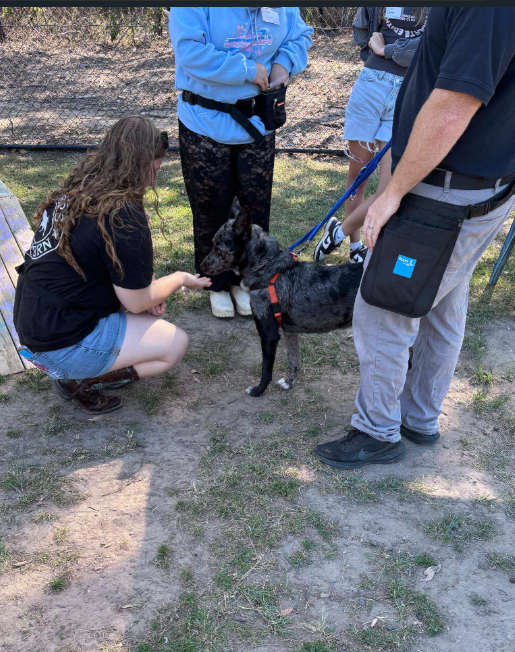
Our Intro to Handle group recently headed out to the agility yard to run a game of Command Bingo with Ripley—a round robin where each participant took turns being the handler, leading Ripley around the group. One-by-one, participants called out a different command ("sit," "lay," "paw") to see whether they could successfully get Ripley to connect with them and achieve the desired behaviour.
Intro to Handle groups at Happy Paws Happy Hearts (HPHH) build the basic foundations of animal care and training, and hands-on activities like this let them put positive mark-and-reward training into practice. At the same time, this training is an im-paw-tant step to improving a dog's adoption prospects by building up their positive behaviours. For Ripley, that means something specific: proving that any family could have a real, successful chance at connecting with him and continuing this kind of positive training at home, just as the group was doing with him in this session.
Something the team noticed instantly which made this game a little harder: Ripley connected fastest and worked the hardest for a particular handler, the males in the group, a possible echo of a bond built with a male owner earlier in his life. That connection was a lovely thing to see for our male participant and trainer but participants discussed how this could also result in narrower adoption prospects for Ripley, whether that's a large family with a range of voices in the house, a woman looking to adopt, or simply the wide variety of people any potential home might bring.
So, this session set out to widen Ripley's capacity and interest to connect with a whole range of different people in a training setting, not just one. By rotating among participants, Ripley was practicing finding and responding to a variety of commands with different tones, pitches and even the handlers’ posture and position. True to form, he found it challenging.
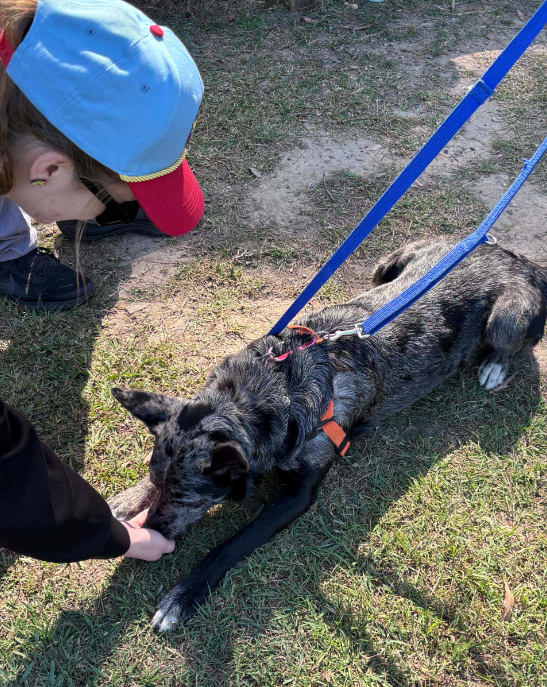
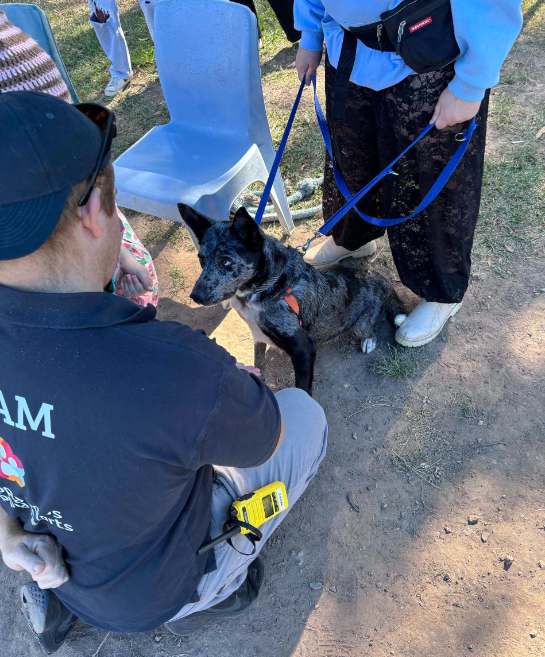
Furthermore, working outside only sharpened the challenge: ever alert to his surroundings, and in this instance not particularly food- or toy-motivated, Ripley easily switched off from the humans and fixated on the wider environment around him (maybe his sharp sense of smell detected agriculture to herd across the way from the shelter).
Command Bingo also did more than get Ripley used to different voices, tones and handlers—it exposed him to different communication styles altogether, something that matters for a working breed who needs clear instructions to bring their A-game. It was a good exercise on both ends of the lead: for Ripley, to receive different types of instruction and learn he could still earn the same reward regardless of who was asking; and for participants, to practice giving those instructions in a way that stayed consistent enough for Ripley to actually register and respond to.
Every moment where Ripley chose to listen and act, despite an unfamiliar voice and a busy environment was a small yet meaningful win. A win which will enhance his success to settling into a new home with a new voice of his own one day.
For our participants, they too celebrated each win as it meant they'd improved a little more at reading Ripley's body language in real time and learning to adjust their own way of communicating to match his needs and his ways of communicating. It is a parallel they often draw to communicating with people as much as with dogs.